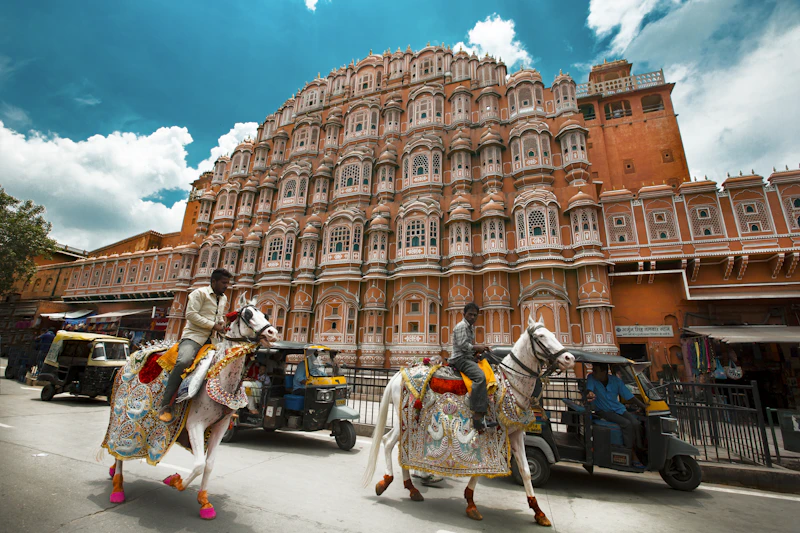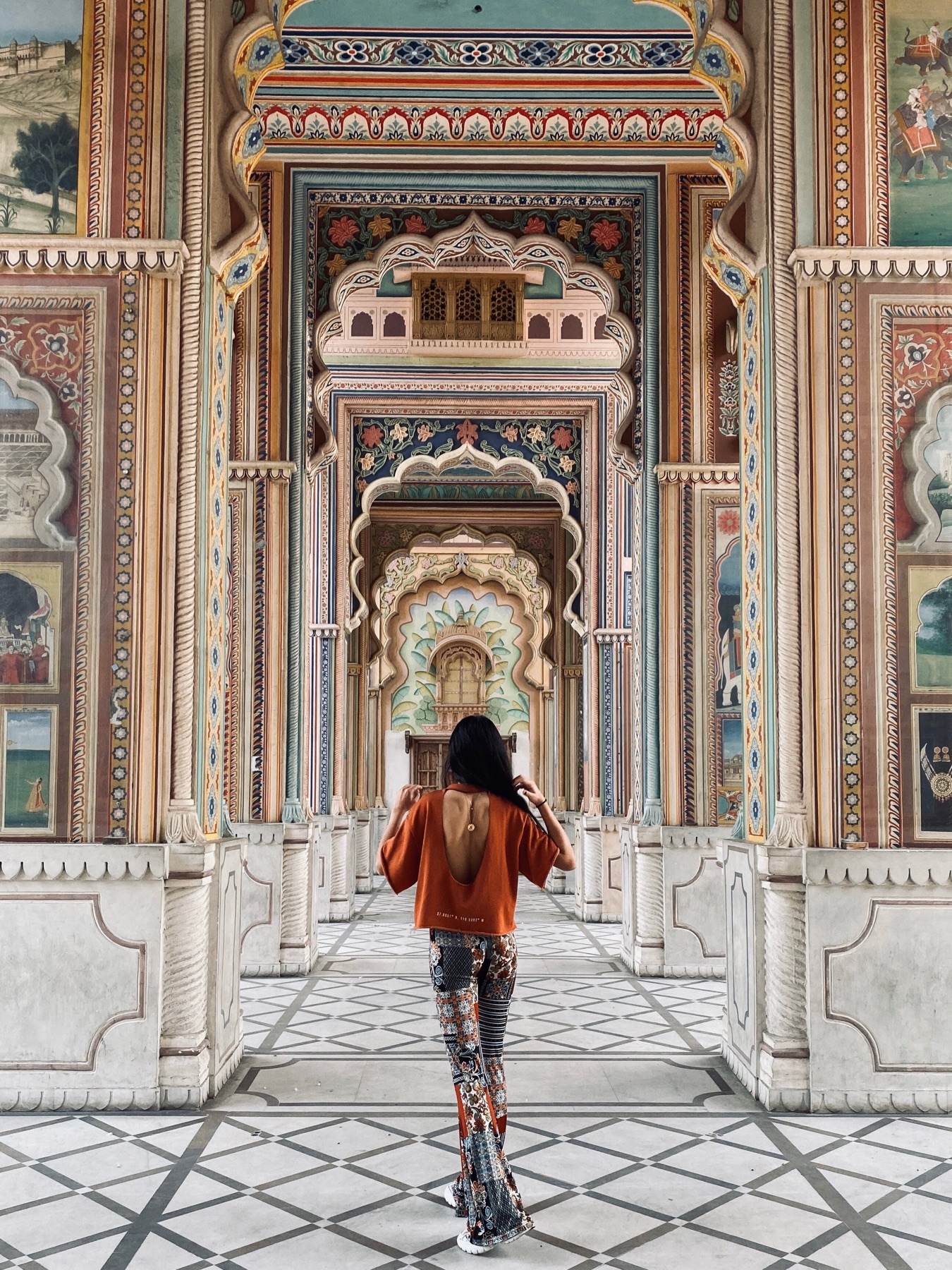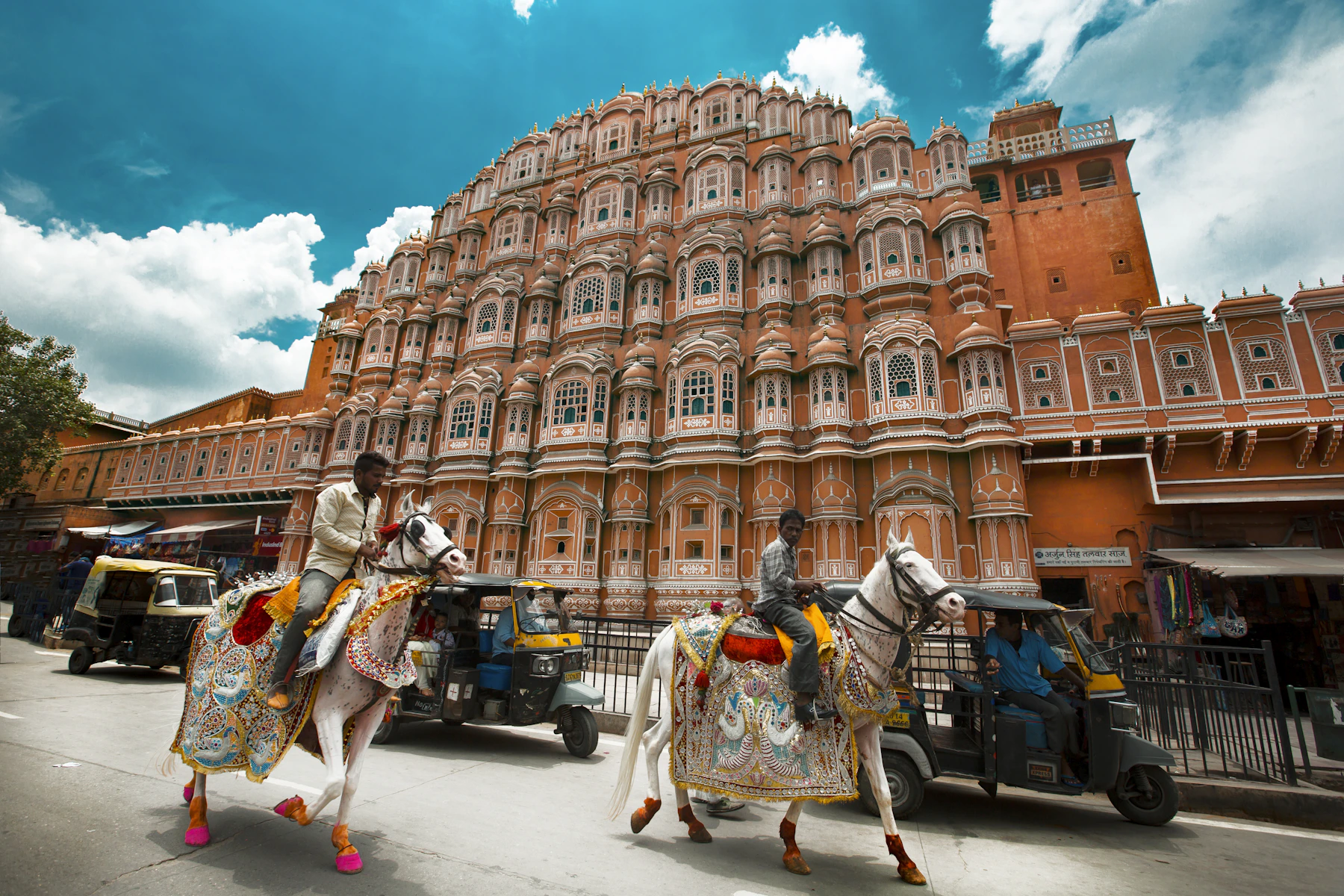
Jaipur is India at its most theatrical — a city painted pink, built by a maharaja who was also an astronomer, laid out on a perfect grid three centuries before grids were fashionable. Come for the forts and palaces; stay for the courtyards, the block-printers, and the long lunches under bougainvillaea.
This is a city of craft. Gem-cutters, blue-potters, hand-block printers, jewellers who have kept the same stalls for generations. Buy less, but buy well — and always from the source.
Palaces & Havelis
Skip the business hotels near the ring road. Jaipur's magic lives in its restored palaces and havelis. Rambagh Palace — once the maharaja's residence, now a Taj hotel — is the grand gesture: peacocks on the lawns, a bar in the old billiards room, and afternoon tea that stretches into evening.
For something more intimate, Samode Haveli in the old city wraps you in frescoed courtyards, while the SUJÁN Rajmahal Palace pairs royal history with a playful, contemporary hand. Narain Niwas Palace has the faded-glamour charm — and, in its garden, the city's most beautiful bar.
Beyond the Thali
Rajasthani food is rich, spiced and generous. Start with a proper thali — Suvarna Mahal at Rambagh Palace serves it as a royal banquet — then go looking for the modern side. Johri, set in a restored haveli in the old city, is the most beautiful dining room in Jaipur, cooking Rajasthan with restraint and precision.
"The best table in Jaipur isn't the fanciest. It's the one under the bougainvillaea, where lunch quietly becomes dinner."
Bar Palladio — blue-and-gold, Italian, impossibly romantic — is the drink-and-dinner ritual you will want to repeat. For sweets, Laxmi Misthan Bhandar (LMB) on Johari Bazaar has been perfecting ghewar and kachori since 1954.
Not Just the Forts
Everyone climbs to Amber Fort — and they should; go at opening, before the crowds and the heat. But don't miss Jantar Mantar, the maharaja's open-air astronomical observatory: giant sundials and instruments that still tell the time to the second. A UNESCO site hiding in plain sight.
The Anokhi Museum of Hand Printing, in a restored haveli near Amber, tells the story of the block-printing that made Rajasthan famous. Small, beautifully done, and the perfect antidote to fort fatigue.
Walk the Pink City. Slowly.
The walled Pink City is a grid of bazaars — Johari for jewellery, Bapu for textiles, Tripolia for lacquer bangles. Rise early, before the traffic, when the light is soft and the shopkeepers are lifting their shutters. Chai at Tapri Central over Central Park. A courtyard lunch. An afternoon with a block-printer.
The forts will still be there. The city is what you came for.