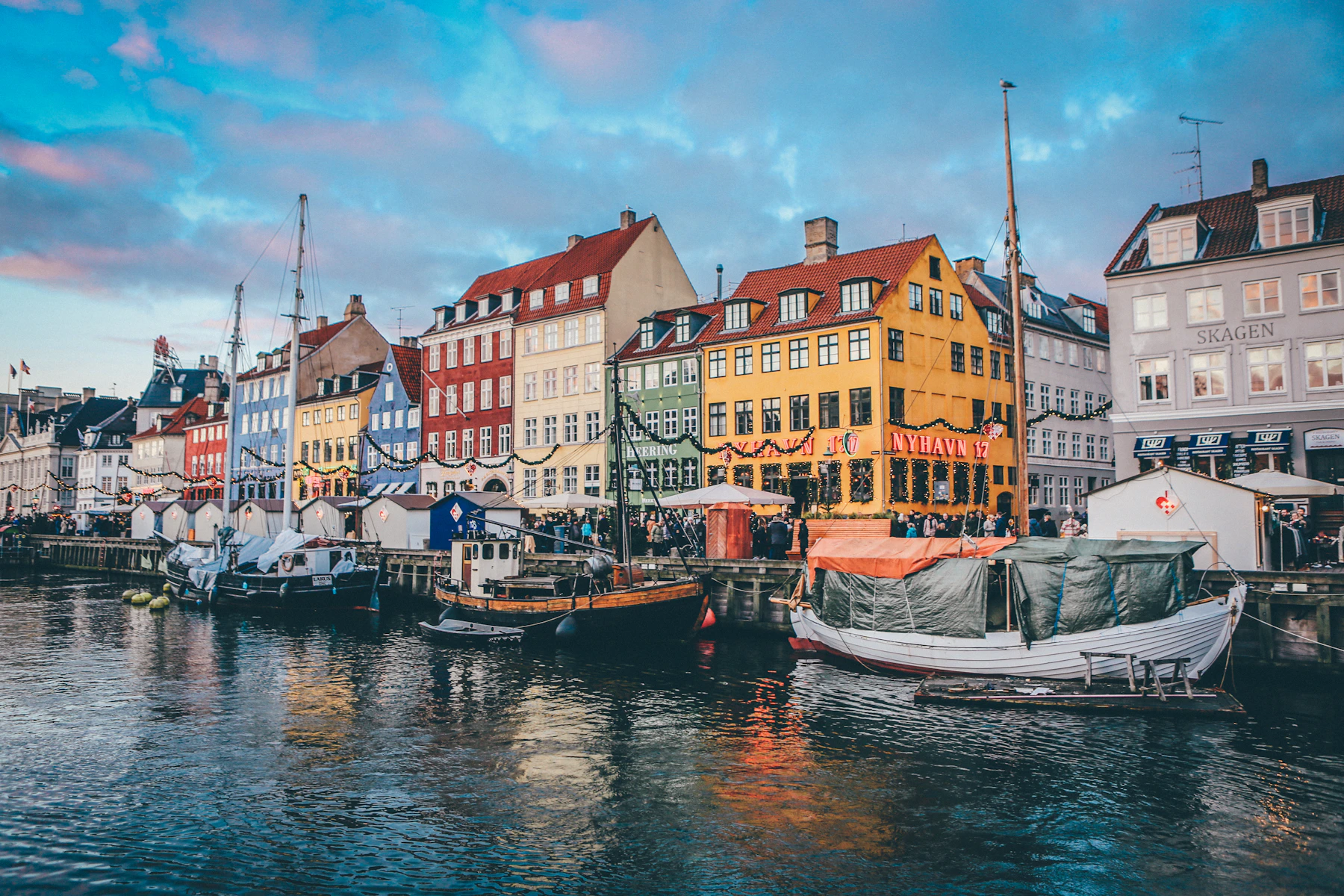
Copenhagen is quietly radical. The city that reinvented what a restaurant could be also makes the world's best everyday design, the best morning bun, and the calmest way to move through a capital — on two wheels. It's small enough to walk, considered enough to reward attention.
Nothing here shouts. That's the point.
Townhouses & Design
Hotel Sanders — the townhouse hideaway behind the Royal Theatre, all rattan and warm brass — is the one everyone falls for. Nobis, in a former music conservatory, is the grown-up choice; Villa Copenhagen, in the old central post office, the grand one.
Wherever you land, you'll want a bike more than a car. The whole city is built for it.
New Nordic & the Morning Bun
Copenhagen rewrote the rules of fine dining, and the pilgrimages are real: Noma, still the most influential kitchen on earth; Alchemist, dinner as five-hour theatre; Geranium, precise and floral. But the city's genius is just as clear at street level.
"The best thing you eat in Copenhagen might cost four euros. Find a bakery, order the cardamom bun, and understand the whole city at once."
Smørrebrød at Aamanns, wood-fired pizza at Bæst, a warm cardamom snurrer at Juno the Bakery or Hart. Simple things, done exactly right.
Natural Wine Capital
Few cities take a glass of wine as seriously — and as unseriously — as Copenhagen. Ved Stranden 10 pours natural wine beside the canal; Pompette keeps it low-lit and low-key. For cocktails, Ruby hides behind an unmarked townhouse door; for coffee, The Coffee Collective and Prolog set the standard the rest of the world copies.
On Two Wheels, Into the Water
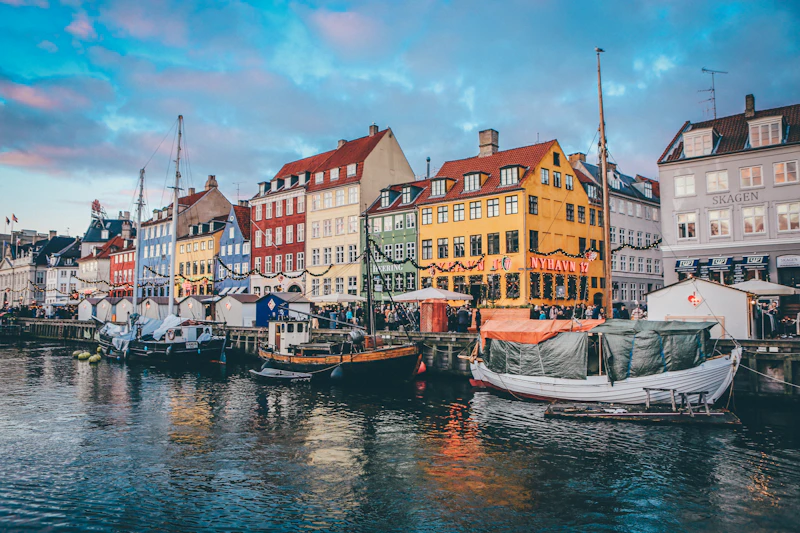
Do as the locals do: rent a bike and let the city open up. In summer, swim off the harbour baths — the water in the middle of the city is clean enough to dive into. Wander Jægersborggade in Nørrebro for makers and bakeries, and Nyhavn early, before the crowds arrive.
Give a day to Louisiana, the museum on the coast north of the city — modern art, a sculpture garden, and a view across the sound to Sweden. It may be the most beautiful museum in the world.