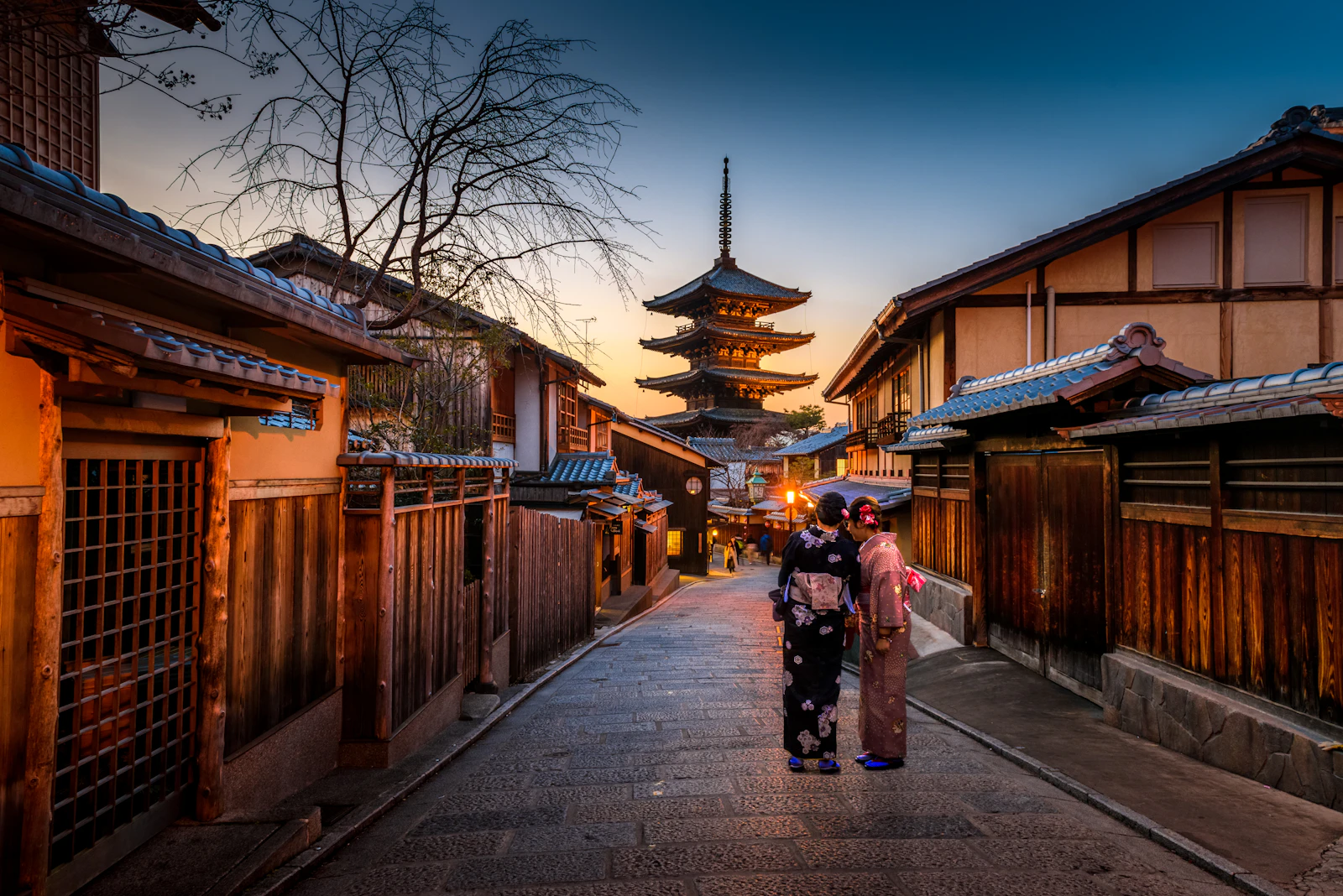
There are cities you try to fit as much as possible into. Kyoto is not one of them.
Kyoto makes you slow down, whether you planned to or not.
Maybe it’s the narrow streets, the wooden machiya houses, the temples appearing quietly between neighbourhoods, or simply the fact that some of the best moments here happen when you’re not really doing anything at all.
Tokyo overwhelms you with possibilities. Kyoto does almost the opposite. It asks you to pay attention.
And that’s probably what I love most about it.
There is an incredible sense of ritual to everyday life here. Tea isn’t just tea. A garden isn’t simply something beautiful to look at. A meal can unfold over several hours, one small plate at a time. Even something as simple as buying sweets can feel like a tradition that has been repeated in exactly the same way for generations.
Of course, Kyoto has the places everyone comes to see. Kiyomizu-dera, Fushimi Inari, the bamboo forests of Arashiyama. They are famous for a reason.
But the Kyoto I remember most exists somewhere between them.
An early morning before the streets fill up. Walking through Gion as the light starts to change. Sitting down for tea at Ippodo. A simple tonkatsu lunch at Katsukura. Looking through small shops without really searching for anything.
And then there is the food.
Kyoto is one of those cities where eating gives you another way of understanding the place.
At one end, there is kaiseki — precise, seasonal and deeply connected to Kyoto’s history. At the other, there are bowls of noodles, tofu restaurants, tiny counters, traditional sweets and neighbourhood places that have been doing the same thing for decades.
Neither feels more important than the other.
That’s part of Kyoto’s appeal.
The city doesn’t need everything to be new.
In fact, much of its beauty comes from exactly the opposite.
Traditions remain visible here without making the city feel frozen in time. Contemporary architecture, design, coffee and restaurants exist alongside temples, tea houses and businesses that have survived for generations.
And somehow, they don’t fight each other.
If it’s your first time, see the temples. Walk through Gion. Go to Nishiki Market. Do the things you’re supposed to do.
But leave some empty space in your itinerary.
Kyoto is particularly good at filling it.
You might find a shop you hadn’t planned to visit, stay too long over tea, take the longer route back to your hotel or discover that the quiet street between two places you saved becomes one of the things you remember most.
Kyoto isn’t a city I would rush through.
Give it time.
It gives quite a lot back.