A Country That Gets Under Your Skin
There are destinations you visit. And then there are destinations that visit you back — that stay with you long after you've unpacked, in the way a smell or a colour suddenly brings you back to a specific moment. Peru is the second kind.
Unique, mysterious, and relentlessly alive — this is a country of extraordinary biodiversity, one of the world's great culinary capitals, and home to one of the seven wonders of the world. Here is what you should know before you go, and what I wish someone had told me.
Lima: Give It More Time Than You Think
Plan at least two nights and three days. Lima surprises people — it surprised me.
Start in the historic centre: Plaza San Martin, Plaza de Armas, the Government Palace, the Cathedral. The San Francisco Convent is not to be missed — its underground catacombs are as atmospheric as anything I've experienced in South America. The Larco Museum is exceptional, both for its collection and its garden.
End in Miraflores and San Isidro — Lima's contemporary neighbourhoods, where beautiful parks meet excellent restaurants and the Pacific stretches out below the cliffs. This is also where Peru's extraordinary food scene is most concentrated. Do not skip this part.
Isla Ballestas: The Poor Man's Galápagos
From Lima, a 3.5 to 4-hour drive brings you to Paracas Pier, where you board a speedboat into the Pacific. On the way, you pass by the National Reserve of Paracas — and if you look up at the hillside, you'll spot El Candelabro, a giant geoglyph etched into the rock whose origins remain unexplained.
At the islands: thousands of birds, sea lions, cormorants, pelicans, and penguins, all in their natural habitat. You cannot disembark — the islands are protected — but the boat gets close enough that you won't feel you've missed anything.
Huacachina: The Desert Oasis
South America's only natural desert oasis, located about four hours from Lima in the Ica region. The setting is cinematic — a small lagoon surrounded entirely by sand dunes. Sandboarding and buggy rides are the main activities, and they are as ridiculous and wonderful as they sound.
The Nazca Lines: Best Seen From Above
Created between 200 BC and 800 AD, these enigmatic geoglyphs stretch across 150 kilometres of desert and can only be properly seen from the air. The largest figures span over 70 metres. No one fully agrees on what they mean. That ambiguity is part of what makes them so compelling.
Cusco, the Sacred Valley & Ollantaytambo
Arrive in Cusco and head directly to the Sacred Valley — give your body time to adjust to the altitude before spending too long in the city itself at 3,400 metres.
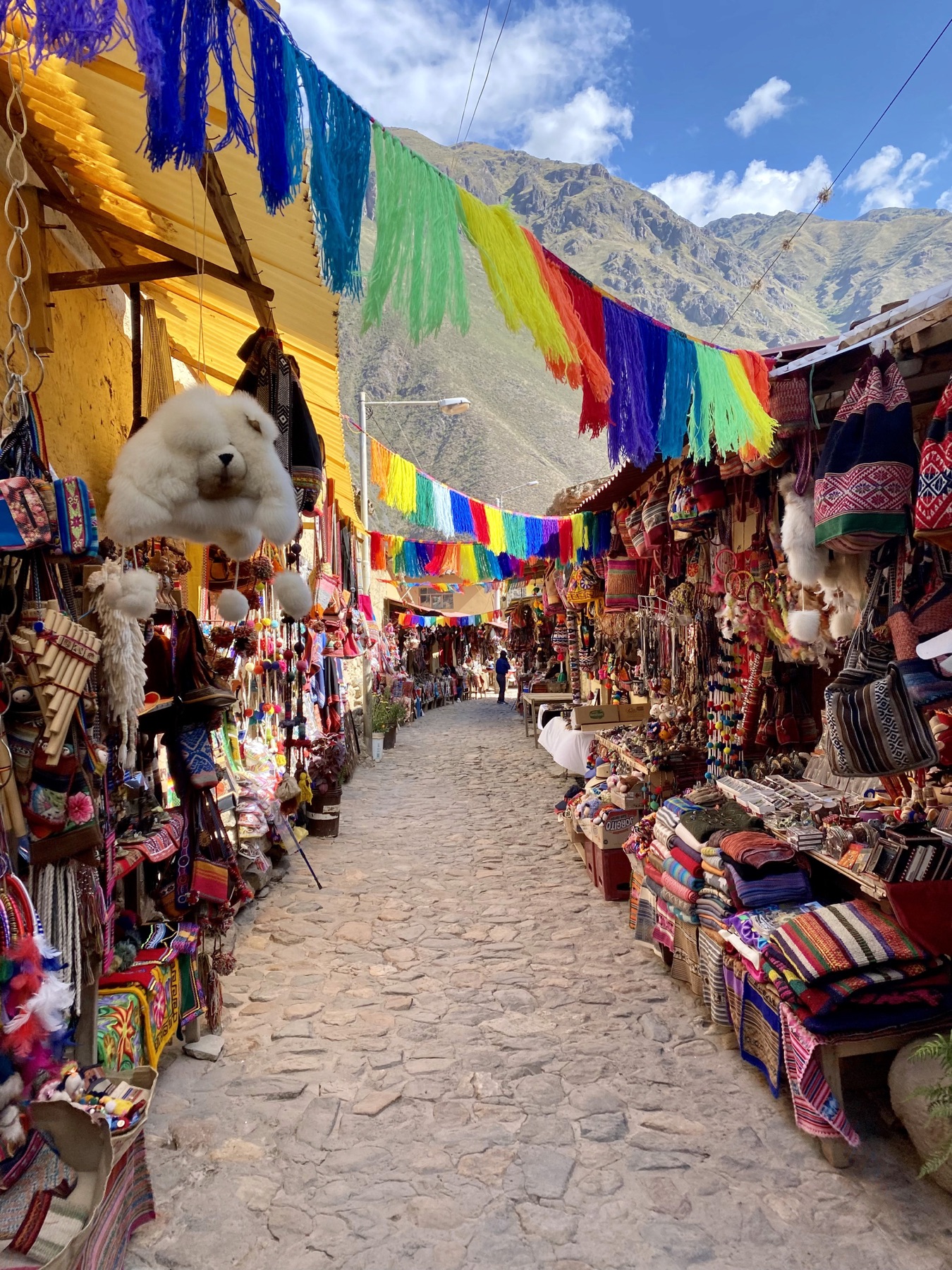
Begin in Pisac, a beautiful market town where you can find ceramics, textiles, and jewellery made by local artisans. The main market days are Tuesday, Thursday, and Sunday. Lunch at Hacienda Huayoccari is worth building your day around.
Ollantaytambo is one of the most historically significant sites in Peru — one of the few places where the Incas actually defeated the Spanish. Climb the terraces for a panoramic view of the village and valley below.
Back in Cusco: the Plaza de Armas, the Cathedral, Koricancha — the great Inca temple to the sun god Inti, partially destroyed by the Spanish and rebuilt as a Catholic church. The ruins surrounding the city — Sacsayhuamán, Qenqo, Puca Pucara, Tambomachay — are each worth a half day. The Map Café Restaurant, inside the Museo Precolombino, is the place to eat.
The Hiram Bingham: A Train Worth the Journey
This is one of the most beautiful and enjoyable moments of the entire trip. The 1920s-style carriages — polished wood, brass, fine fabrics, antiques — carry you through some of the most dramatic Andean landscape imaginable, with fine dining and live music on board. All drinks included. The journey ends with teatime at the Sanctuary Lodge.
It is worth every minute.
Read the full story on the Hiram Bingham →
Machu Picchu
From Aguas Calientes, a 30-minute shuttle bus takes you up. Join a guided tour — approximately 2.5 hours — and allow yourself to simply be present. This is one of the great archaeological sites on earth, never discovered by the Spanish, hidden until the 20th century, and still being excavated today.
One practical note: use the bathroom before ascending. There are no facilities inside.
Spend the afternoon at the Sanctuary Lodge for teatime before heading back down.
Rainbow Mountain
An early start — 5:30 or 6:00 AM — for a full day that culminates at 5,040 metres. The hike itself takes about 1 hour and 40 minutes, passing red valleys, the Ausangate mountain chain, South American camelids, and glacial lakes.
At the top: the colours of Vinicunca — stripes of red, gold, green, and purple layered into the mountain like something imagined rather than real.
This hike is difficult. Acclimatise properly before attempting it. Pack sun protection, warm layers, gloves, a hat, a raincoat, and chocolate. The best season is the dry season, April through November.
Lake Titicaca
The largest lake in South America, sitting at 12,500 feet above sea level, divided between Peru and Bolivia. The scale of it is hard to prepare for. So is the light — particularly in the early morning, when the surface turns completely still and the surrounding mountains seem to float above it.
On Altitude: An Honest Note
You will spend much of this trip at significant altitude. Cusco sits at 3,400 metres. Rainbow Mountain reaches 5,200. Before our trip, we were advised to take altitude medication. My honest advice: if you have no underlying health issues, consider skipping it. The medication left me dizzy for an entire day. On the day we climbed to 5,000 metres without it, we felt fine.
What genuinely works: coca tea and coca leaves. They are widely available, deeply effective, and part of the local culture for a reason. Try them before reaching for medication.
The Details
Peru does not reveal itself quickly. But it rewards patience, curiosity, and a willingness to go beyond the obvious. There is nowhere quite like it.