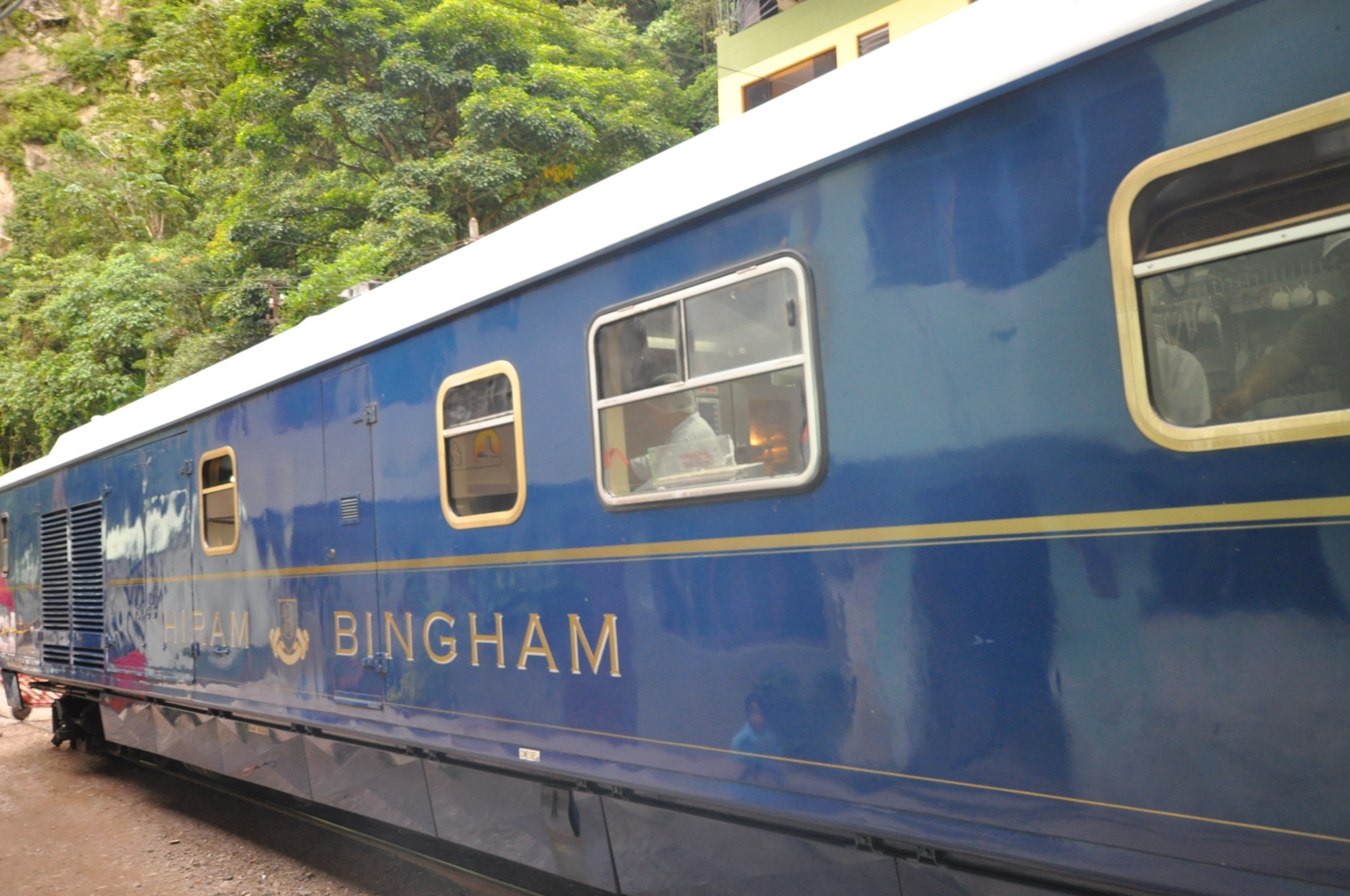
A Train Worth Building a Trip Around
Most trains are a means of getting somewhere. This one isn't. The Hiram Bingham turns the ride to Machu Picchu into one of the best parts of the trip — before you've even reached the ruins.
Named after the Yale historian who brought Machu Picchu to the world's attention, the Hiram Bingham is Belmond's flagship train in Peru — a fleet of 1920s-style Pullman carriages that run between the Cusco area and Aguas Calientes, the small town at the foot of the ruins. It is, by a wide margin, the most expensive way to get there. It is also, by most honest accounts including ours, the most memorable.
Who Was Hiram Bingham
Hiram Bingham III was not looking for Machu Picchu. In 1911, the Yale lecturer and explorer was searching for Vilcabamba, the last refuge of the Inca after the Spanish conquest, when a local farmer named Melchor Arteaga led him up an overgrown ridge above the Urubamba River. What Bingham found on July 24 that year — a citadel of stone terraces and temples, still largely intact — had never been a secret to the Quechua families living nearby. But it was unknown to the outside world, and Bingham's expeditions and best-selling book made sure it wouldn't stay that way. Peru later named the road up to the ruins the Hiram Bingham Highway. Decades after that, Belmond named this train after him too.
The Route
The Hiram Bingham departs from Poroy, just outside Cusco, or from one of the Sacred Valley stations — Urubamba or Pachar — depending on the season and your itinerary, and ends at Aguas Calientes, also called Machu Picchu Pueblo. From there, it's a short bus ride up to the citadel itself.
The scenery does most of the work. The line follows the Urubamba River through the Sacred Valley, climbing through farmland and eucalyptus groves before the mountains close in and the landscape turns properly dramatic — steep green walls, switchback terraces, cloud sitting low over the ridgelines. It's a slow reveal, which is exactly the point.
On Board
The carriages are the reason people book this train over the alternatives. Polished wood panelling, brass fittings, and deep blue livery with gold lettering — deliberately built to feel like something out of the 1920s golden age of rail travel, not a modern train dressed up to look old.
The full-day journey includes a welcome show, a bar car serving pisco sours and other Peruvian cocktails, a multi-course lunch or brunch with wine, and an observation car where live musicians play through much of the ride. On arrival, there's a VIP lounge at the station, a private bus transfer up to the citadel, and a guided tour of the ruins. The day ends with afternoon tea back at the Belmond Sanctuary Lodge, the hotel that sits directly at the entrance to Machu Picchu, before the return journey.
It is worth every minute.
Is It Worth The Price
Honestly — it depends on what you're optimising for. PeruRail's Vistadome and Expedition trains cover the same tracks for a fraction of the cost, with big windows and perfectly good service. If your goal is simply to reach Machu Picchu, they'll do the job.
But the Hiram Bingham isn't selling transport. It's selling an occasion — one built for people who want the journey itself to be a highlight, not a logistics problem to solve. If that's you, and the budget allows it, we'd book it again. If you're travelling on a tighter budget or a longer overland itinerary through Peru, save the splurge for something else and take the Vistadome instead. Neither choice is wrong.
The Details
The ruins are the reason you come to Peru. The Hiram Bingham is the reason the four hours before you get there might be just as memorable.